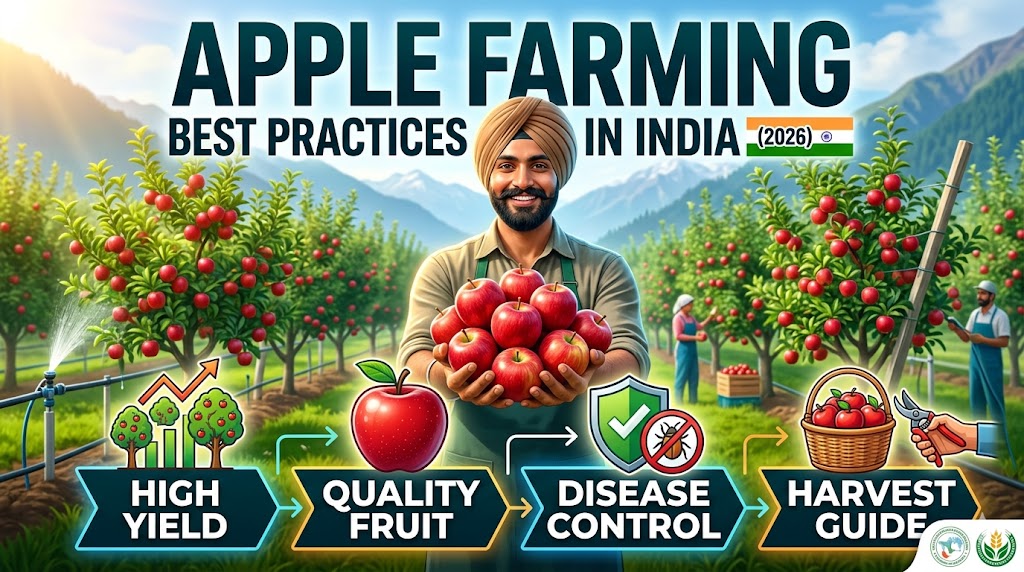
Apple farming in India is an orchard business. The best practices are not “one-time actions”—they are a sequence of decisions repeated every season:variety & rootstock selection, drainage-safe establishment, airflow pruning, test-based nutrition, preventive disease timing, and proper harvesting/packing.
When these are done consistently, apple orchards produce premium fruit and reduce unnecessary losses.
In this guide, we focus on the practices that actually improve yield and fruit quality in Indian conditions—especially in temperate apple belts.
1) What drives apple yield and fruit quality?
- Chilling fit and variety compatibility: affects bud break, flowering, and fruit set.
- Drainage and root health: waterlogging increases root stress and disease risk.
- Light and airflow in canopy: controls fruit size, color, and disease pressure.
- Preventive disease program: especially scab and mildew in wet/rain windows.
- Harvest timing and cold chain: determines shelf life and market grade.
2) Orchard establishment: the fundamentals you cannot skip
Step A: drainage-first planning
If your orchard site keeps water during/after rainfall, the biggest problem is not fertilizer—it is drainage.
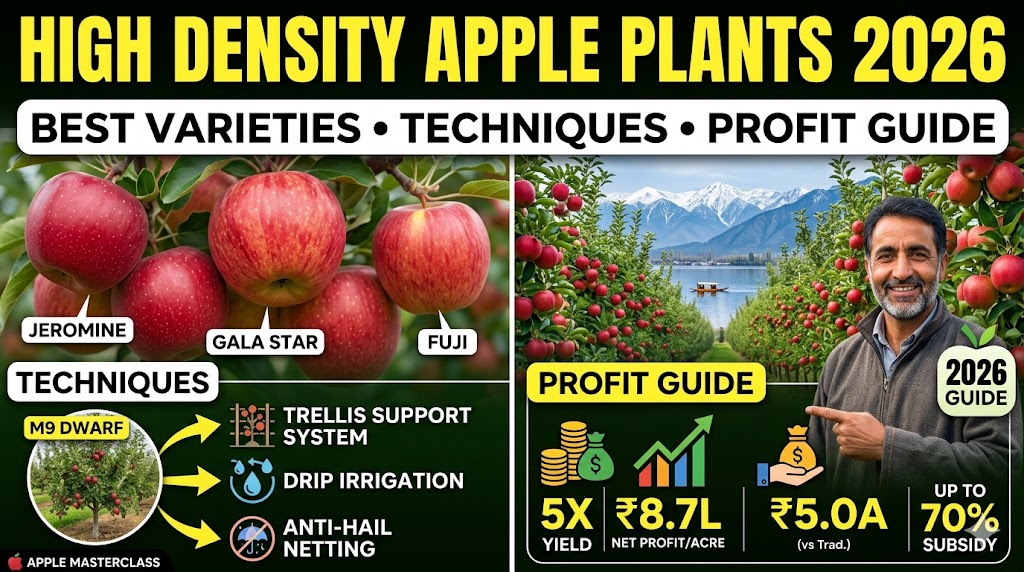
Many high-density orchards fail because dwarfing rootstocks become more sensitive when waterlogging occurs.
Fix drainage early: channels, mounds, or orchard layout changes.
Step B: soil preparation and pit mix
- Prepare pits with topsoil and well-rotted compost/FYM.
- Use soil test results to guide corrections for pH and nutrient status.
- Do not overapply raw organic matter near roots.
Step C: spacing and canopy management from day one
Spacing should allow airflow and easy worker access. Dense canopies increase humidity and reduce spray penetration.
This increases disease risk and reduces fruit color development.
3) Irrigation and fertigation best practices
Apple trees need balanced moisture. Too little water reduces fruit size and growth; too much water stresses roots.
Drip irrigation supports more stable moisture and helps avoid excessive waterlogging.
- Prefer drip irrigation for controlled moisture.
- Adjust irrigation based on rainfall and soil conditions.
- For nutrition efficiency, use fertigation where systems and skills allow.
- Mulch helps reduce evaporation and keeps moisture stable.
4) Nutrition management (stage-wise + test-based)
The biggest mistake in nutrition management is applying fertilizers by guesswork.
Use soil tests (and leaf/tissue tests when possible) to avoid wasting money and preventing nutrient imbalance.
- Split nitrogen: supports balanced vegetative growth without excessive softness.
- Phosphorus: supports roots and flowering/fruit set.
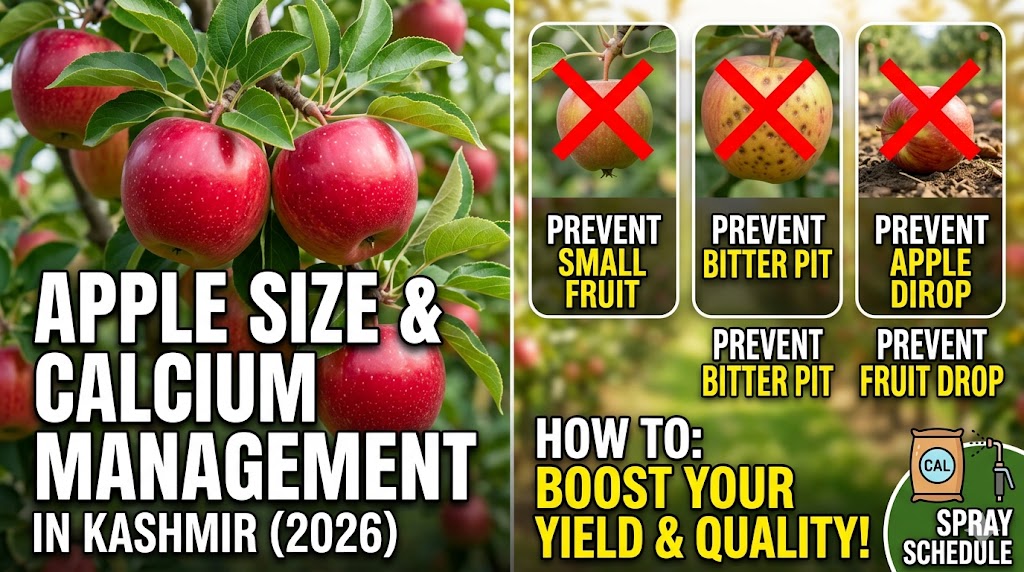
- Potassium: supports fruit quality, firmness, and shelf life.
- Micronutrients: correct only when deficiency is confirmed.
5) Pruning & training: airflow-based orchard design
Pruning is one of the most effective disease-control strategies because it improves airflow.
Diseases spread faster when canopy stays humid and sprays cannot penetrate.
- Prune during appropriate dormancy windows.
- Remove dead, weak, and diseased branches.
- Thin to improve light penetration and airflow.
- Sanitize pruning tools to avoid spreading infection through cuts.
6) Pest and disease management: practical “prevention timing”
In apple orchards, major yield losses usually come from disease pressure during specific weather windows.
Your goal is to reduce infection risk before symptoms become visible.
Common issues and orchard actions
- Apple scab: watch for infection after rainy periods; clean fallen leaves and manage preventive sprays.
- Powdery mildew: improve airflow; manage humidity and prune dense shoots.
- Fire blight (where present): remove infected shoots quickly; sanitize tools.
- Aphids and borers: scout regularly and use IPM strategies.
Weekly orchard routine (simple but powerful)
- Walk the orchard at least once a week.
- Check leaves (top and underside) for early lesions.
- Check shoots and fruit for spots or deformities.
- Record observations to predict risk periods for next actions.
7) Harvesting, grading and storage handling
- Harvest at maturity that matches your buyer market requirement.
- Grade by size/quality to maintain consistent box value.
- Reject damaged fruit early to reduce storage losses and rot spread.
- Cool quickly using cold storage or appropriate pre-cooling methods.
- Pack properly for transport to prevent bruising.
8) Profit and risk planning (what to calculate)
Profit in apple farming depends on orchard year and your ability to reduce losses.
Calculate:
- All-year costs: inputs + labor + plant protection + storage/packing
- Expected yield: by orchard age (early years vs peak)
- Loss rates: disease damage + rejection %
- Sale price range: based on grade and buyer type
FAQ
Q1: Which apple variety is best for profit in India?
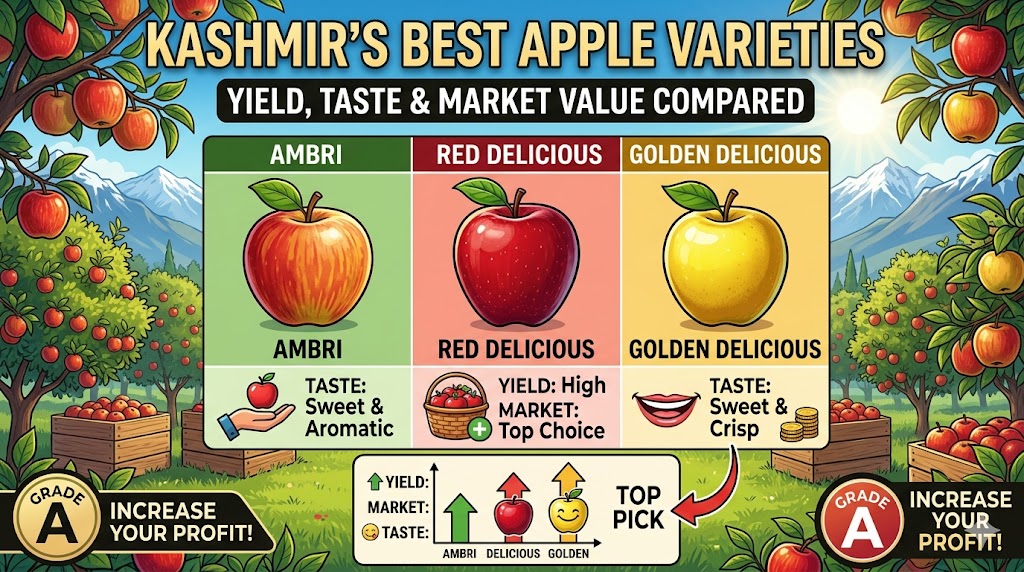
A: Profit depends on your chilling fit, yield consistency, and your buyer’s grade requirements. Choose varieties with reliable cold performance and strong market demand.
Q2: How long do apple trees remain productive?
A: With good management, apple orchards can remain productive for decades.
Q3: Can apples be grown in South India?
A: Some low-chill varieties may grow in suitable microclimates, but chilling requirement still matters. Choose carefully and manage irrigation/heat stress.
Conclusion
The best apple farming practices are the ones that prevent losses and improve grade:
drainage-first establishment, airflow pruning, test-based nutrition, preventive disease timing, and correct harvest/packing.
Use this guide as your season routine and build an orchard that performs year after year.