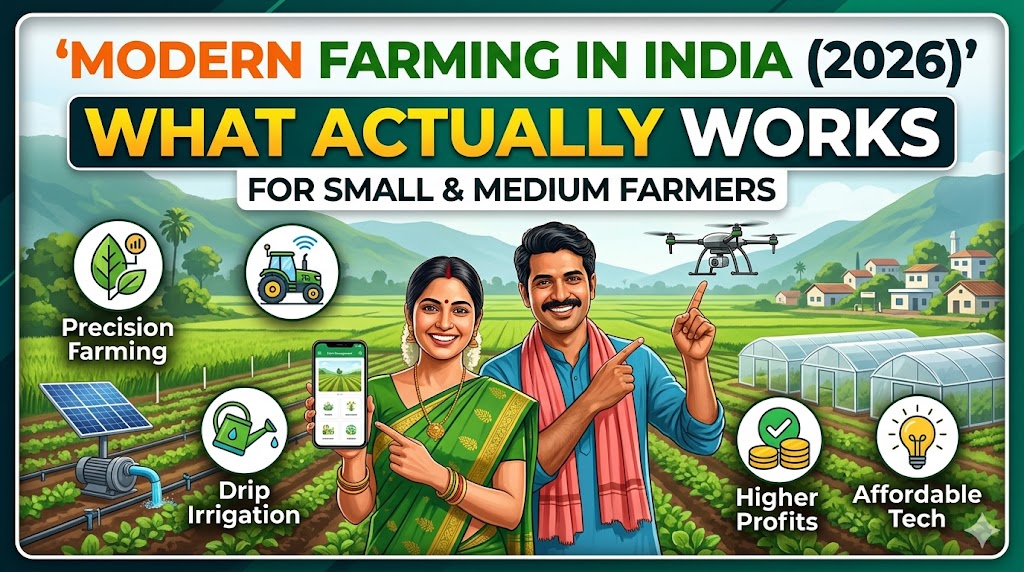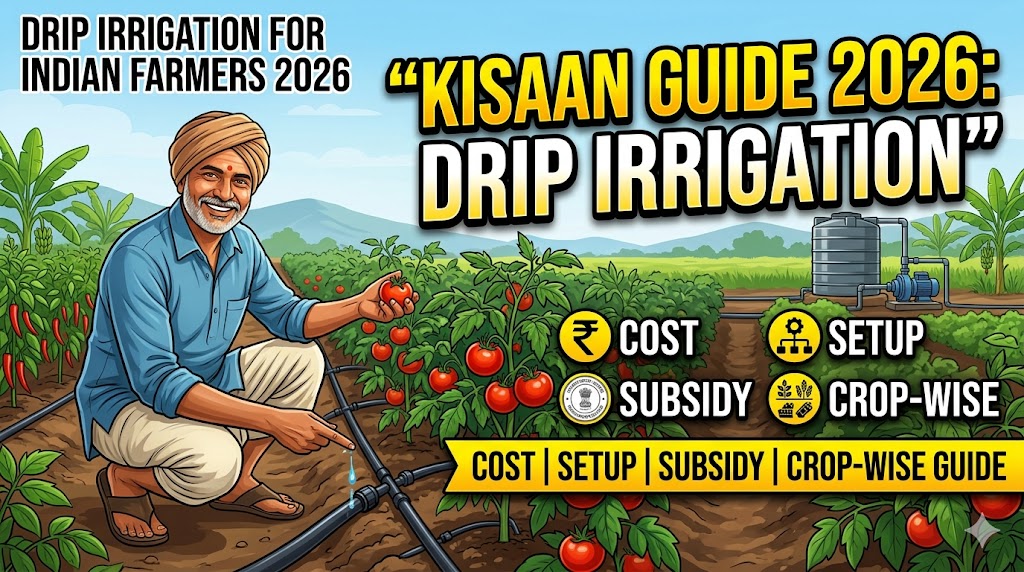
Most Indian farmers who have not yet switched to drip irrigation say the same two things: it is expensive, and they are not sure it will work for their crop. Both concerns are understandable — but both are also largely outdated. Drip irrigation costs have dropped significantly over the last decade, government subsidies now cover a substantial portion of the investment, and the system works for almost every crop grown commercially in India.
This guide gives you a complete, practical picture: what drip irrigation actually costs in 2026, what subsidies are available and how to claim them, how to set up a basic system, and which crops benefit most.
What Is Drip Irrigation and Why It Matters for Indian Farmers
Drip irrigation delivers water directly to the root zone of each plant through a network of pipes, tubes, and emitters. Instead of flooding a field or spraying water overhead, drip releases water slowly and precisely — exactly where the plant needs it, exactly when it needs it.
The result: less water used, less disease spread through wet foliage, better nutrient efficiency when fertigation is added, and more consistent yields regardless of rainfall variation.
In a country where water scarcity affects farming across multiple seasons and regions, drip irrigation is one of the most practical investments a farmer can make.
Drip Irrigation Cost Per Acre in India (2026)
Cost varies depending on crop type, row spacing, emitter density, and system quality. Below are realistic estimates for common setups:
| Farm Type | System Type | Approximate Cost Per Acre |
|---|---|---|
| Vegetables (close spacing) | Inline drip tape | ₹18,000–₹30,000 |
| Fruit orchards (wide spacing) | Online drip with emitters | ₹22,000–₹40,000 |
| Sugarcane | Sub-surface drip | ₹35,000–₹55,000 |
| Banana | Inline drip with fertigation | ₹25,000–₹45,000 |
| Small farm (<2 acres) | Basic gravity/pump kit | ₹12,000–₹20,000 |
These are installation costs including pipes, laterals, emitters, filters, and mainline. Pump cost is separate if you do not already have one.
After subsidy, most farmers pay 40–55% of the above figures. The subsidy structure is explained below.
Government Subsidy for Drip Irrigation in India 2026
The main subsidy scheme for drip irrigation is under PMKSY — Pradhan Mantri Krishi Sinchayee Yojana, specifically the “Per Drop More Crop” component. This is a centrally sponsored scheme implemented through state agriculture or horticulture departments.
Subsidy Rates (general guidance)
| Farmer Category | Subsidy Percentage |
|---|---|
| Small & marginal farmers (up to 2 hectares) | 55% of system cost |
| Other farmers | 45% of system cost |
| SC/ST farmers | Up to 55–60% in most states |
| Farmers in NE states and hilly areas (including J&K) | Higher subsidy — check state department |
Important: Subsidy is paid on approved system cost as per state schedule of rates — not your actual purchase price. Always check your state’s current schedule before budgeting.
How to Apply for Drip Irrigation Subsidy
- Visit your district agriculture or horticulture department office
- Submit application with land documents (Jamabandi/Khasra), Aadhaar, and bank details
- Get pre-approval before purchasing the system — buying first and applying later is not eligible
- Purchase from an empanelled manufacturer listed by your state department
- After installation and inspection, subsidy is transferred directly to your bank account
In J&K specifically, the Horticulture Department handles drip subsidy for fruit crops. Farmers can also check the MIDH (Mission for Integrated Development of Horticulture) portal for current scheme status.
Components of a Drip Irrigation System (What You Are Buying)
Understanding the components helps you compare quotes from vendors and avoid being oversold unnecessary equipment.
| Component | Function |
|---|---|
| Main pump | Pressurizes water from source (borewell, tank, canal) |
| Filter unit | Removes particles that block emitters (sand filter + screen filter) |
| Fertigation tank/venturi | Injects soluble fertilizers into the water line |
| Mainline pipe | Carries water from pump to field zones |
| Sub-main pipe | Distributes water across rows |
| Lateral pipes / drip tape | Runs along each crop row |
| Emitters / drippers | Release water at controlled rate (2–4 litres/hour typical) |
| Pressure gauges & valves | Control flow zone by zone |
For a small farm under 2 acres, a basic gravity-fed setup without a pump is possible if your water source is elevated — significantly reducing cost.
Crop-wise Drip Irrigation Setup Tips
Vegetables (Tomato, Capsicum, Cucumber)
Use inline drip tape with 20–30cm emitter spacing. Run laterals along each bed. Combine with plastic mulch for maximum water saving and weed suppression. Fertigation through the drip line reduces labor cost significantly.
Apple and Pear Orchards (Kashmir / Himachal)
Use online drip with 2–4 emitters per tree depending on canopy size. Mature trees need 2–4 litres/hour per emitter. Space emitters around the drip zone, not at the trunk base. Pair with soil moisture monitoring if possible to avoid both under- and over-irrigation.
Banana
Banana has high water demand but is very sensitive to waterlogging. Inline drip with fertigation is the standard setup. Two laterals per row with emitters at 50cm spacing works well for most planting densities.
Sugarcane
Sub-surface drip (buried 20–30cm) reduces evaporation and keeps the soil surface dry, which reduces weed germination. Higher installation cost but strong water saving and yield improvement results.
Onion and Garlic
Drip tape with 15–20cm emitter spacing on flat beds. Onion responds very well to precise moisture management — irregular irrigation is a primary cause of bulb splitting and storage losses.
Water Saving and Yield Benefits: What Farmers Actually Report
| Benefit | Typical Improvement |
|---|---|
| Water saving vs flood irrigation | 40–60% less water used |
| Fertilizer efficiency (with fertigation) | 25–40% less fertilizer for same yield |
| Yield improvement | 15–40% depending on crop and previous irrigation method |
| Labor saving | Significant — no manual irrigation rounds needed |
| Disease reduction | Reduced foliar disease from wet leaves (in overhead-irrigated crops) |
These are consistent figures reported across multiple government studies and farmer surveys across India.
Common Mistakes to Avoid
Buying cheap drip tape without checking emitter quality. Low-quality emitters clog within one season and deliver uneven water. Always buy from BIS-certified manufacturers listed on your state’s approved vendor list.
Installing without a proper filter. Even clean-looking water contains particles that block emitters. A sand filter plus screen filter is non-negotiable.
Running all zones simultaneously. Each zone should be sized to your pump’s flow capacity. Overloading reduces pressure and gives uneven water distribution.
Not flushing laterals regularly. Flush end caps at the tail end of each lateral monthly to prevent sediment buildup.
Skipping soil moisture check. Drip is precise — but precision only helps if you are irrigating based on actual crop need, not a fixed timer.
Drip Irrigation Payback Period (Realistic Estimate)
For most crops and farm sizes, drip irrigation pays back the net investment (after subsidy) within 2–4 seasons through combined water saving, fertilizer saving, and yield improvement.
For orchard crops like apple, pear, or mango — where the tree is a long-term asset — payback through yield improvement and reduced tree stress compounds over many seasons.
FAQ
Q1: Is drip irrigation suitable for small farms under 1 acre? A: Yes. Small farm kits are available from ₹8,000–₹15,000 and subsidy applies even for small holdings. The water and fertilizer savings are proportionally the same.
Q2: Can I apply fertilizer through drip irrigation? A: Yes — this is called fertigation. Water-soluble fertilizers are injected into the drip line using a venturi injector or fertigation tank. It is one of the biggest benefits of drip, improving fertilizer use efficiency significantly.
Q3: How long does a drip system last? A: Quality inline drip tape lasts 3–5 seasons. Hard pipe mainlines and sub-mains last 10–15 years with reasonable care. Filter units and emitters need periodic inspection and replacement.
Q4: Does drip irrigation work in cold climates like Kashmir? A: Yes, with seasonal management. In Kashmir, systems are typically operated from April to October and drained before winter to prevent pipe damage from freezing. Apple and pear orchards in Anantnag, Shopian, and Pulwama are increasingly adopting drip.
Q5: Where do I complain if subsidy is delayed? A: Contact your district agriculture officer. You can also raise a grievance through the PMKSY portal (pmksy.gov.in) or your state’s agriculture department helpline.
Conclusion
Drip irrigation is no longer a technology for large farms or cash-rich growers. With subsidies covering 45–55% of cost and systems now available for farms as small as half an acre, it is accessible to the majority of Indian farmers. The water saving alone justifies the investment in most regions — and when combined with fertigation, the improvement in both yield and input efficiency makes drip one of the highest-return investments available to a working farmer in 2026.