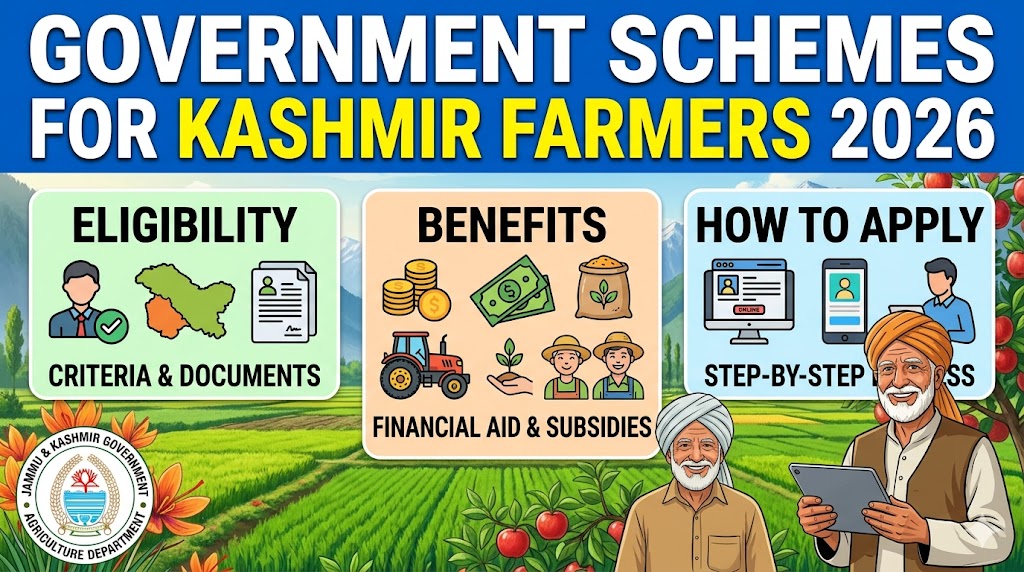
Farming in Kashmir has always been supported by nature’s generosity — fertile soil, clean water, and a climate perfect for high-value crops like apples, saffron, walnuts, and cherries. But in 2026, Kashmir farmers have another powerful advantage: a wide range of government schemes designed specifically to support agriculture and horticulture in the region.
Whether you are an apple grower in Sopore, a saffron farmer in Pampore, or a vegetable grower in Budgam, there are schemes available that can reduce your costs, improve your infrastructure, and increase your income significantly. This complete guide covers the most important government schemes for Kashmir farmers in 2026 — including eligibility criteria, benefits, and how to apply.
Why Government Schemes Matter for Kashmir Farmers
The cost of farming has risen steadily over the past decade. Inputs like fertilizers, pesticides, irrigation equipment, and cold storage have become expensive. At the same time, market prices for farm produce can be unpredictable. Government schemes help bridge this gap by providing:
- Direct financial subsidies on equipment and infrastructure
- Low interest or zero interest loans for farm development
- Free or subsidised planting material and seeds
- Training and technical support from agriculture experts
- Market access support for domestic and export sales
Taking advantage of these schemes can save a farmer lakhs of rupees every year. Yet many Kashmir farmers are unaware of what is available or how to access it. This guide is designed to change that.
1. Pradhan Mantri Kisan Samman Nidhi (PM-KISAN)
What it is: A central government scheme that provides direct income support to eligible farmer families across India, including Jammu and Kashmir.
Benefit: ₹6,000 per year paid directly into the farmer’s bank account in three equal instalments of ₹2,000 every four months.
Eligibility:
- Must be a landholding farmer family
- Land must be registered in the farmer’s name
- Excludes institutional landholders and government employees
How to apply:
- Visit your nearest Common Service Centre (CSC) or Agriculture Department office
- Carry your Aadhaar card, land records (Jamabandi), and bank account details
- Register online at pmkisan.gov.in
Important for 2026: Farmers who have not yet completed eKYC verification must do so immediately to continue receiving instalments. Visit any CSC with your Aadhaar card to complete eKYC.
2. Pradhan Mantri Fasal Bima Yojana (PMFBY) — Crop Insurance
What it is: A government-backed crop insurance scheme that protects farmers against losses due to natural disasters, pests, and diseases.
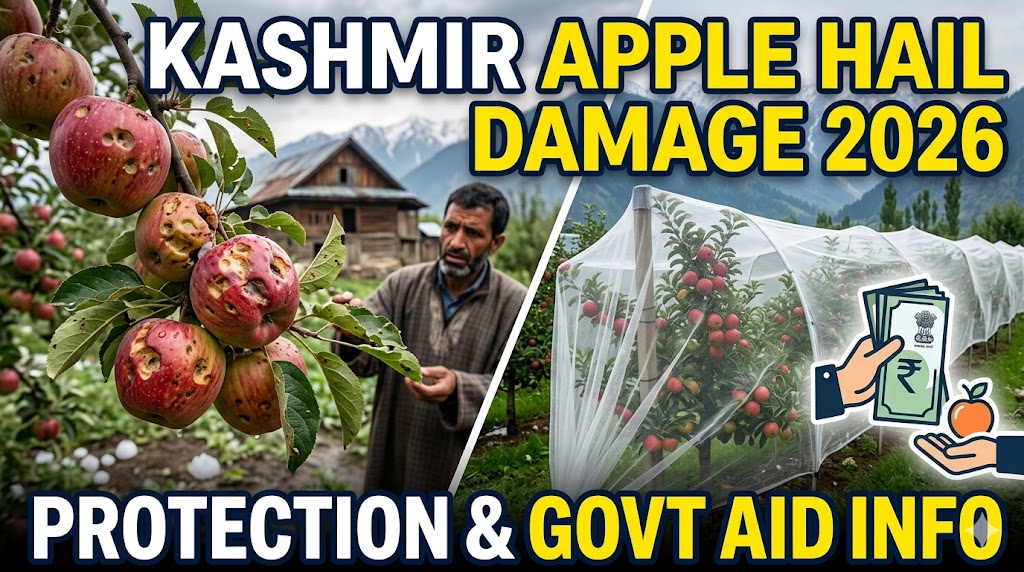
Benefit: Financial compensation when crops are damaged by floods, hailstorms, drought, disease outbreaks, or other covered events. Kashmir apple and saffron farmers have greatly benefited from this scheme in recent years following hailstorm damage.
Premium rates:
- Kharif crops: 2% of sum insured
- Rabi crops: 1.5% of sum insured
- Horticulture crops: 5% of sum insured (government pays the rest)
Eligibility:
- All farmers growing notified crops in notified areas
- Both loanee and non-loanee farmers can enroll
How to apply:
- Apply through your nearest bank, CSC, or insurance company agent
- Deadline is typically 2 weeks before the sowing season
- Online registration at pmfby.gov.in
3. Mission for Integrated Development of Horticulture (MIDH)
What it is: One of the most important schemes for Kashmir farmers, MIDH provides financial assistance for establishing and developing horticulture crops including apples, walnuts, cherries, and saffron.
Benefits in 2026:
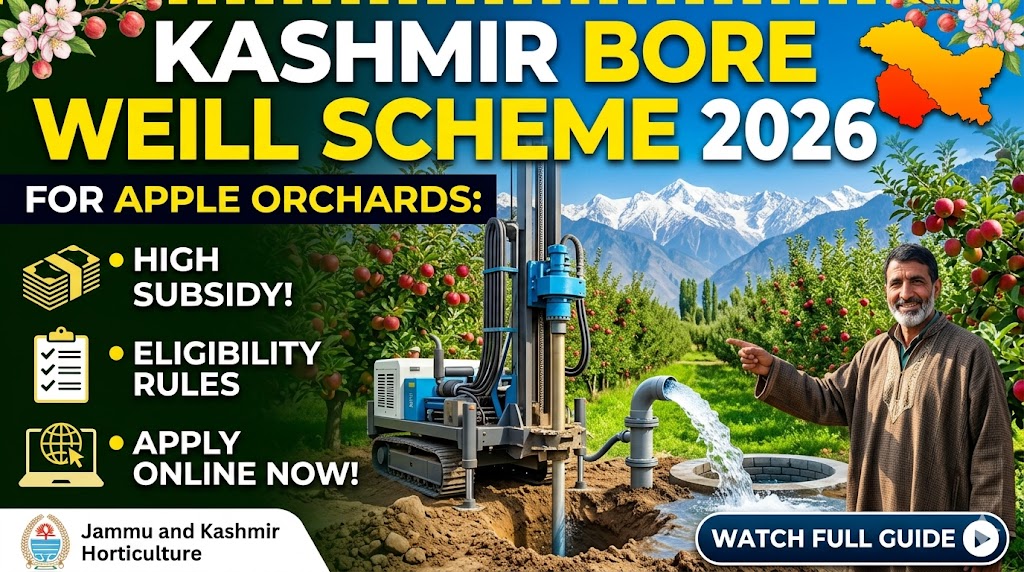
- 50% subsidy on cost of planting new orchards
- Subsidy on drip and sprinkler irrigation systems
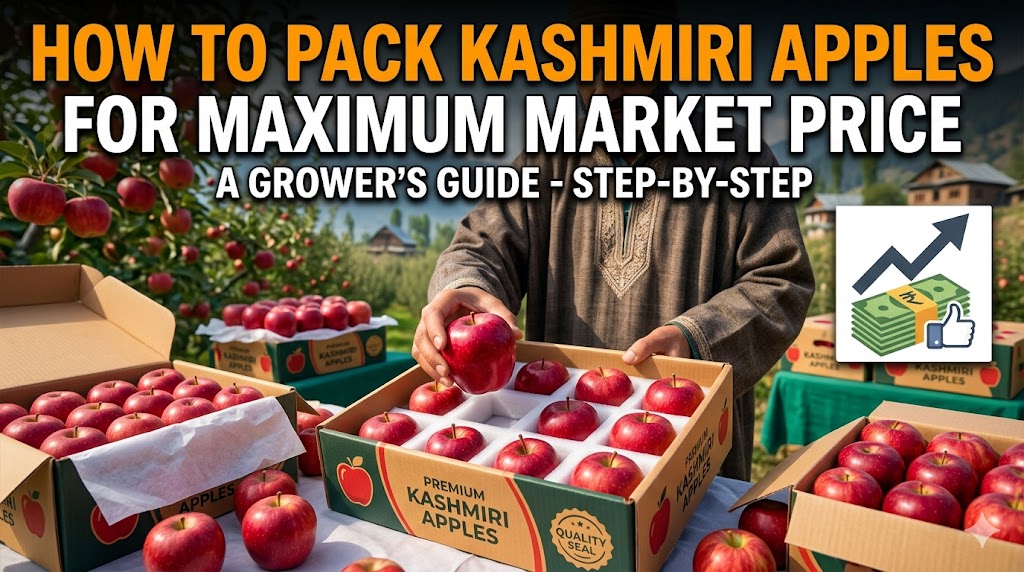
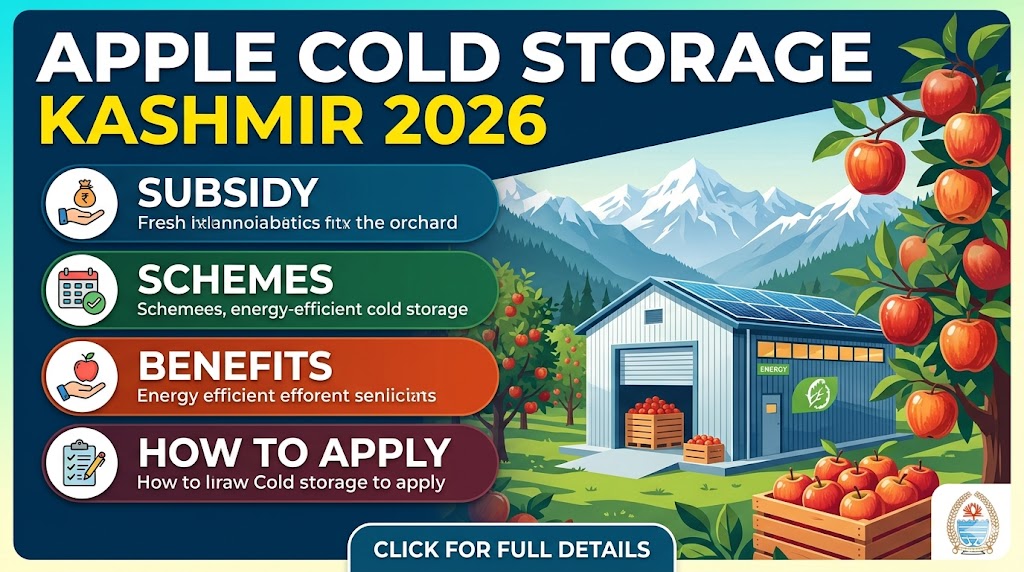
- Support for post-harvest infrastructure including packhouses and cold storage
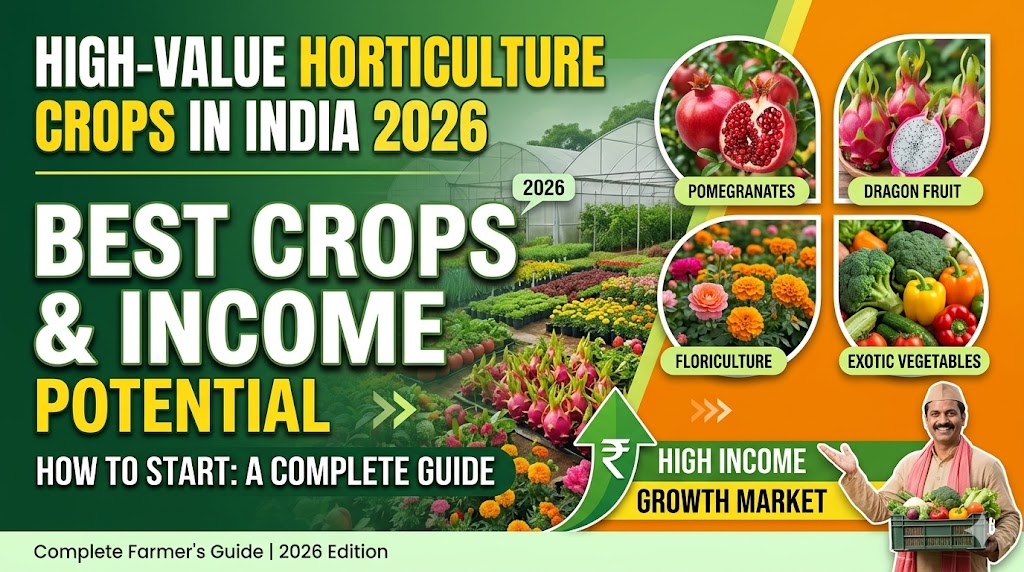
- Assistance for protected cultivation (polyhouses and greenhouses)
- Training programs for modern horticulture practices
Eligibility:
- Individual farmers, farmer groups, and farmer producer organisations
- Must have suitable land for horticulture cultivation
- Priority given to small and marginal farmers
How to apply:
- Contact the J&K Horticulture Department office in your district
- Submit application with land records, identity proof, and bank details
- Department officials will verify and process your application
4. National Saffron Mission
What it is: A dedicated scheme to revive and modernise saffron cultivation in Kashmir, which produces over 90% of India’s saffron.
Benefits:
- Free or highly subsidised saffron corms for planting
- Support for irrigation infrastructure in saffron growing areas
- Technical training on modern saffron cultivation methods
- Post-harvest processing and storage support
- Market linkage assistance for premium pricing
Eligibility:
- Farmers in traditional saffron growing areas of Kashmir — primarily Pampore, Pulwama, Budgam, and Kishtwar
- Small and marginal farmers given priority
How to apply:
- Contact the Saffron Research Station in Pampore
- Apply through the J&K Horticulture Department
- Farmer cooperatives and groups can apply collectively for larger benefits
5. Pradhan Mantri Krishi Sinchai Yojana (PMKSY)
What it is: A scheme focused on water conservation and efficient irrigation to ensure every farm field gets adequate water — captured in the slogan “Har Khet Ko Pani, More Crop Per Drop.”
Benefits for Kashmir farmers:
- 55% to 75% subsidy on drip irrigation systems
- Subsidy on sprinkler irrigation equipment
- Support for micro-watershed development
- Assistance for water harvesting structures
Why this matters in Kashmir: Many apple and vegetable growers still rely on flood irrigation, which wastes enormous amounts of water and contributes to fungal diseases. Switching to drip irrigation with PMKSY subsidy support can significantly improve both yield and fruit quality.
How to apply:
- Apply through the Agriculture or Horticulture Department in your district
- Online applications at pmksy.gov.in
- Subsidy is released directly to the vendor supplying equipment after installation verification
6. Kisan Credit Card (KCC)
What it is: A flexible credit scheme that gives farmers access to affordable short-term loans for purchasing seeds, fertilizers, pesticides, and other farm inputs.
Benefits:
- Credit limit based on land holding and crop requirements
- Interest rate of 4% per year for loans up to ₹3 lakh (after government interest subvention)
- Flexible repayment tied to harvest and marketing season
- Can also be used for allied activities like dairy and fisheries
Eligibility:
- All farmers including tenant farmers, sharecroppers, and self-help groups
- No minimum land holding requirement
How to apply:
- Visit any nationalised bank, regional rural bank, or cooperative bank
- Carry land records, Aadhaar card, and passport-size photographs
- Processing is usually completed within 2 weeks
7. J&K Horticulture Development Scheme
What it is: A state-level scheme specifically designed for Jammu and Kashmir that complements central government programs with additional support for local horticulture.
Benefits in 2026:
- Subsidised supply of high-quality apple, walnut, and cherry planting material
- Support for apple orchard rejuvenation — replacing old unproductive trees with high-density modern varieties
- Cold chain infrastructure development grants
- Market development assistance for direct sales to metro cities
How to apply:
- Visit your nearest J&K Horticulture Department block office
- Applications are accepted at the beginning of each planting season
8. e-NAM — National Agriculture Market
What it is: An online trading platform that connects farmers directly with buyers across India, eliminating middlemen and ensuring better prices.
How Kashmir farmers benefit:
- Direct access to buyers in Delhi, Mumbai, and other major cities
- Transparent price discovery through online bidding
- Faster payment directly to bank account
- Particularly useful for apple and walnut growers seeking premium prices
How to register:
- Visit enam.gov.in
- Register with your Aadhaar, land records, and bank details
- Your nearest APMC market can assist with registration
Tips for Getting Maximum Benefit from Government Schemes
- Keep all your documents updated — Aadhaar, land records, and bank account linked to Aadhaar are essential for almost every scheme
- Join a Farmer Producer Organisation (FPO) — groups often access larger subsidies and better support
- Visit your district Agriculture or Horticulture Department office at the start of each year to check for new schemes
- Never pay middlemen or agents to apply for government schemes — all applications are free
- Follow up regularly after submitting applications — persistence pays
Conclusion
In 2026, Kashmir farmers have access to more government support than ever before. From direct income transfers through PM-KISAN to major horticulture subsidies under MIDH and the National Saffron Mission, the financial tools are available to transform your farm and significantly increase your income. The key is awareness and action — knowing what is available and taking the steps to apply.
JY Farm will continue to update this guide as new schemes are announced. Bookmark this page and share it with fellow farmers in your village so that everyone benefits from what the government has made available.