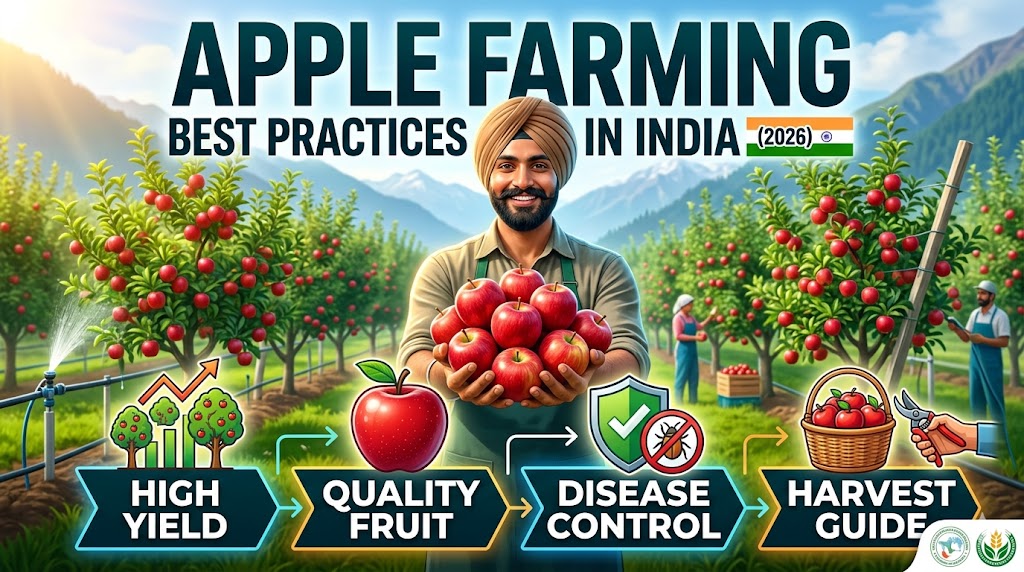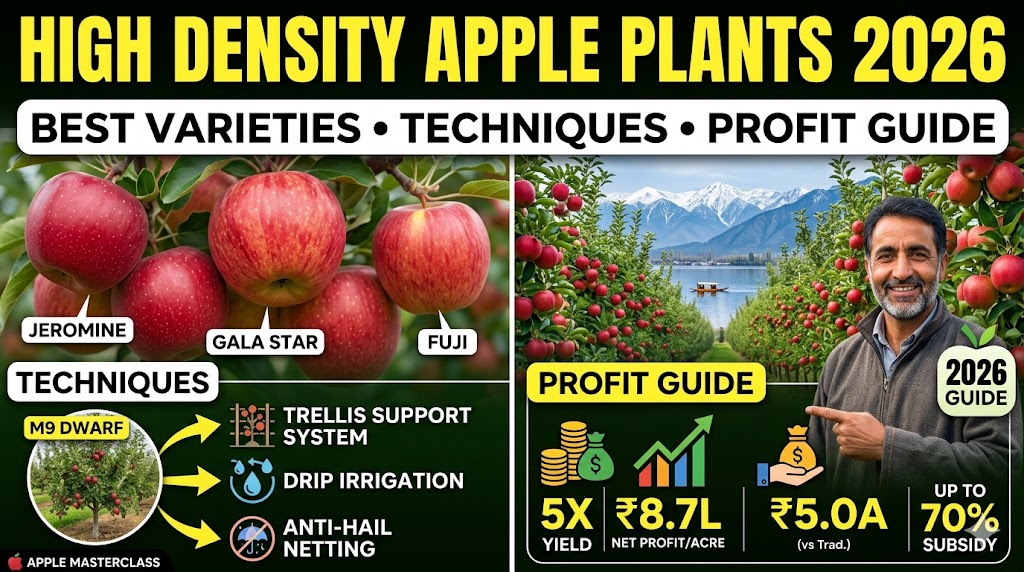
Apples have always been known as the king of fruits, and high-density apple farming has revolutionized the fruit industry across hilly and temperate regions. In 2026, this modern planting system is gaining more popularity among Indian farmers due to its high yield, early fruiting, and better quality. High-density planting combines advanced horticultural techniques and dwarf varieties to optimize fruit production even on small pieces of land effectively.
What is High Density Apple Planting?
High-density apple planting is a modern farming system where dwarf or semi-dwarf apple plants are planted closer together than in traditional orchards. This approach allows farmers to grow more trees per hectare, leading to higher productivity and easier orchard management. The concept focuses on maximizing yield per unit area while ensuring top-notch fruit quality.
Advantages of High Density Apple Plants
-
Early fruiting within 2 to 3 years
-
Uniform fruit size and shape
-
Better sunlight exposure and aeration
-
Higher yield per acre than traditional systems
-
Easier pruning, spraying, and harvesting
-
Lower risk of major pest infestations
-
Consistent and better market returns
Best Regions for High Density Apple Farming in India
India has several regions suitable for high-density apple cultivation due to their favorable climatic conditions. These include cooler and hilly zones that replicate natural apple-growing environments.
| Region | State | Elevation Range | Ideal Temperature |
|---|---|---|---|
| Shimla & Kinnaur | Himachal Pradesh | 1500–2700 m | 7°C–24°C |
| Baramulla & Shopian | Jammu & Kashmir | 1600–2600 m | 6°C–22°C |
| Nainital & Almora | Uttarakhand | 1300–2500 m | 7°C–25°C |
| East Khasi Hills | Meghalaya | 1200–1800 m | 8°C–22°C |
Top High Density Apple Varieties for 2026
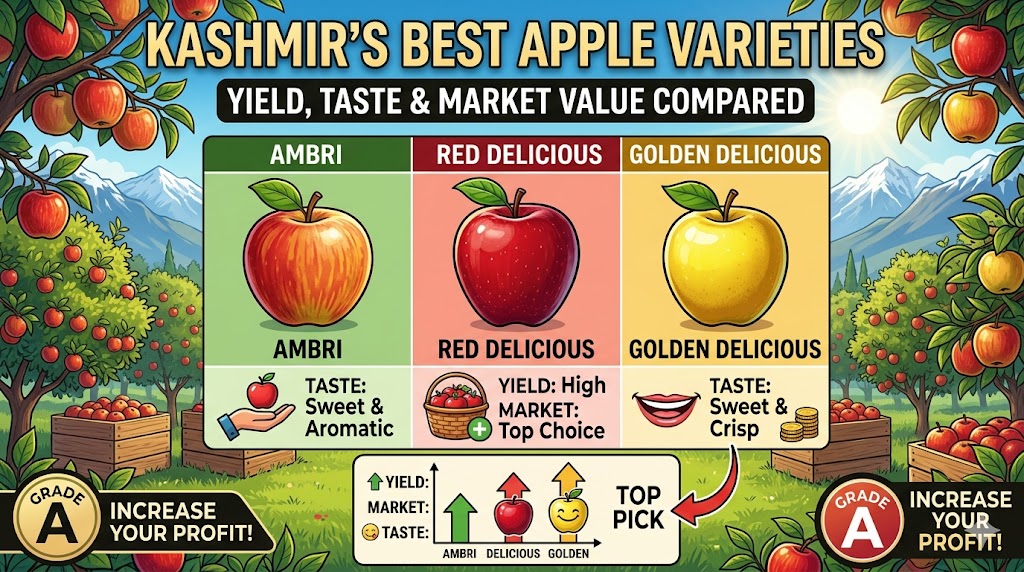
Selecting the right variety is essential for success in high-density orchards. In 2026, new hybrid and improved varieties are driving growth due to their adaptability and productivity.
| Variety | Rootstock Type | Yield Potential | Maturity Time |
|---|---|---|---|
| Super Chief Sandidge | M9 rootstock | 50–60 tons/ha | 2–3 years |
| Red Fuji | M26 rootstock | 45–55 tons/ha | 3 years |
| Golden Delicious | M9 rootstock | 40–50 tons/ha | 3 years |
| Gala Mast | M26 rootstock | 55–60 tons/ha | 2–3 years |
| Granny Smith | M9 rootstock | 40–50 tons/ha | 3–4 years |
Required Climate and Soil
Apple cultivation thrives in temperate climates. High-density apple farms grow best at altitudes between 1500 and 2700 meters above sea level, with cold winters and mild summers being ideal.
-
Optimal temperature: 6°C to 25°C
-
Rainfall: 1000–1250 mm annually
-
Soil pH: 6.0–7.0
-
Well-drained loamy soil preferred
-
Organic matter must be high with good water-holding capacity
Spacing and Planting Methods
The planting distance plays an important role in maximizing production.
| Rootstock Used | Plant to Plant Distance | Row to Row Distance | Trees per Hectare |
|---|---|---|---|
| M9 | 1 m | 3 m | 3000–3300 |
| M26 | 1.5 m | 3.5 m | 2500–2800 |
| M7 | 2 m | 4 m | 2000–2200 |
Each pit should be about 60×60×60 cm. Fill pits with well-rotted compost, topsoil, and organic manure. Planting is done in winter dormancy, usually from December to February, depending on the region.
Fertilizer and Nutrient Management
High-density apple orchards require balanced nutrients to maintain consistent productivity.
-
Nitrogen: 250 g per plant annually
-
Phosphorus: 150 g per plant
-
Potassium: 200 g per plant
-
Use organic compost and foliar sprays for micronutrients like zinc and boron.
-
Apply mulch to retain moisture and improve soil texture.
Irrigation Requirements
Drip irrigation is widely recommended for high-density apple plants. It maintains moisture efficiently while saving water and electricity.
-
Two irrigations per week in dry seasons
-
Drip lines should provide about 4–5 liters per plant daily
-
Mulching reduces water loss
Pruning and Training System
Pruning helps maintain plant size and encourages light penetration, which is crucial for better fruit quality.
-
Apply central leader system for training
-
Prune during dormancy (December–February)
-
Remove weak, diseased, or unproductive branches every year
-
Encourage lateral branches for more fruiting spurs
Pollination and Bee Management
Pollination plays a vital role in apple yield. Most apple varieties are cross-pollinated, so grow at least two or three compatible pollinator varieties within the orchard. Keep beehives close during flowering season to enhance pollination efficiency and maximize yield.
Pest and Disease Management
Regular monitoring prevents major losses.
Common issues include:
-
Apple scab
-
Powdery mildew
-
Aphids and codling moths
Preventive measures:
-
Use organic sprays like neem oil and copper fungicide
-
Maintain clean orchard hygiene
-
Prune damaged branches regularly
-
Avoid waterlogging
Yield and Profit Potential
A well-maintained high-density apple orchard can yield around 40–60 tons per hectare starting from the 3rd year, depending on variety and management. Initial investment is higher compared to traditional systems, but the return on investment improves significantly.
Rough Profit Estimate per Hectare (2026):
-
Initial setup cost: ₹10–12 lakh
-
Annual yield: 40–60 tons
-
Average selling price: ₹60–80/kg
-
Gross annual income: ₹24–48 lakh
-
Net profit: ₹10–20 lakh after maintenance costs
Marketing and Export Potential
India’s apple industry is witnessing strong growth due to organized cold storage and logistics systems. High-density apple varieties align with international quality standards, making them suitable for both domestic retail markets and export. Farmers often partner with agri-tech startups and government programs to expand distribution networks.
Government Support and Subsidy Schemes 2026
The Government of India and various state departments are promoting high-density apple cultivation under horticulture mission schemes.
Major assistance includes:
-
Subsidy up to 50–70% on planting material and infrastructure setup
-
Financial aid for drip irrigation, fencing, and cold storage units
-
Training initiatives and farmer knowledge programs
-
GST exemptions on select horticultural tools
These initiatives make high-density apple farming economically attractive and sustainable for farmers in mountainous and temperate zones.
Maintenance and Care Tips for Better Yield
-
Use organic manures regularly to boost soil fertility
-
Monitor pests through integrated pest management (IPM)
-
Avoid over-irrigation
-
Maintain pruning consistency every season
-
Test soil fertility once every two years
-
Apply protective nets during hail-prone periods
Future of High Density Apple Plants in 2026 and Beyond
In 2026, precision farming, sensor-based irrigation, and climate-smart technology are improving yield efficiency. Apple growers are adopting dwarf rootstocks and high-yielding hybrids to overcome climate challenges. The use of digital market platforms for selling also ensures better price realization and reduces dependence on middlemen. High-density apple farming is not only profitable but sustainable for upcoming generations of farmers.
FAQs about High Density Apple Plants 2026
1. What is the ideal planting time for high-density apple trees?
Planting is best done during winter dormancy, between December and February.
2. How many apple plants can be planted per acre under high density?
Around 1000–1300 trees can be planted per acre depending on the rootstock spacing.
3. How soon do high-density apple trees start fruiting?
They start producing fruits within 2 to 3 years after planting.
4. Are high-density systems suitable for small farmers?
Yes, because they maximize income even on small land areas.
5. Does high-density apple farming require special irrigation systems?
Drip irrigation is preferred as it provides uniform water supply efficiently.
6. How long can a high-density apple orchard remain productive?
With proper care, it can remain productive for more than 15 years.
Conclusion
High-density apple farming in 2026 offers a modern, profitable, and sustainable path for Indian fruit growers. With the right variety selection, management, and government support, it delivers high yields and better quality fruit. This approach ensures improved farmer income, efficient land use, and a promising future for the apple industry across India’s hilly regions.