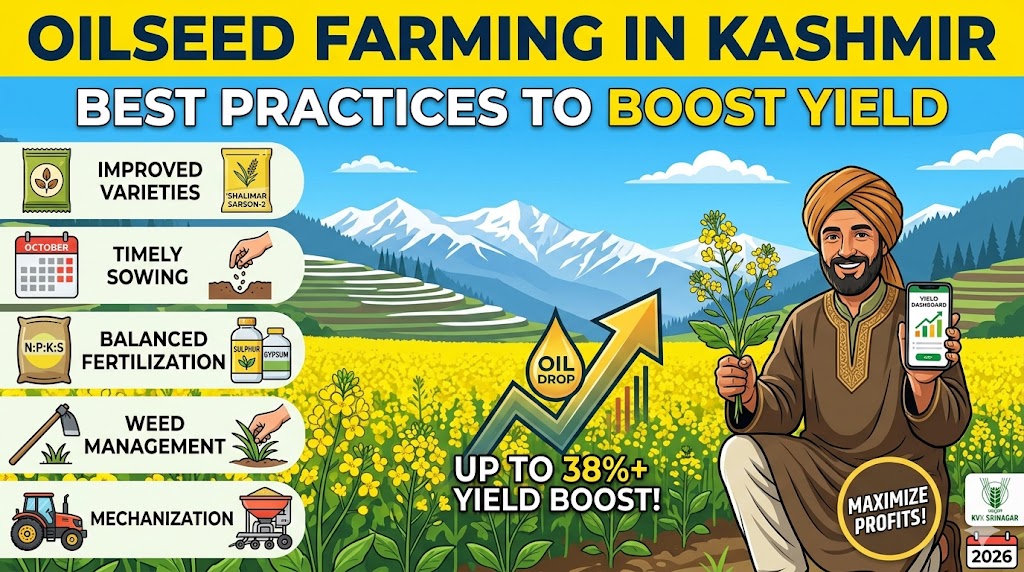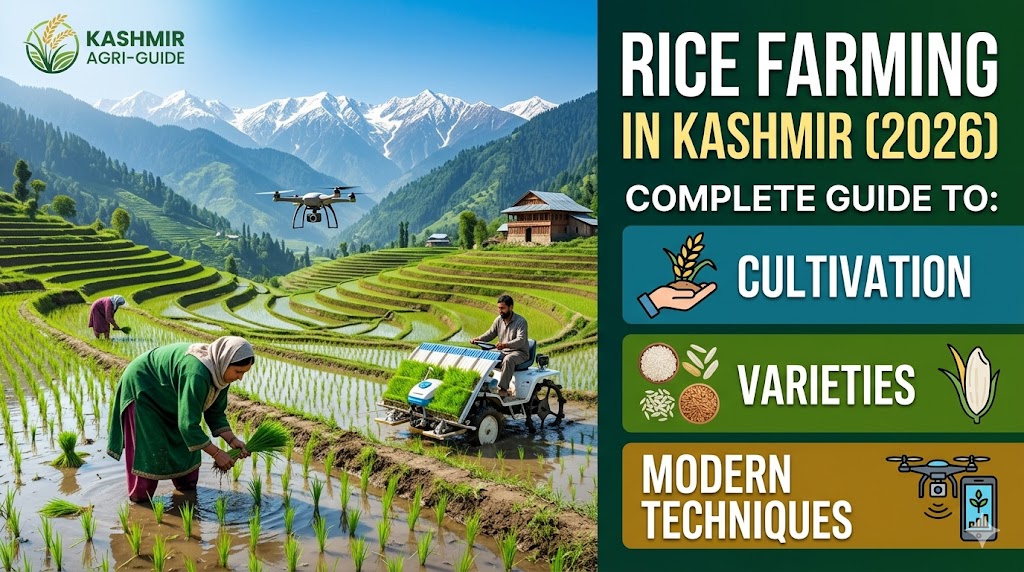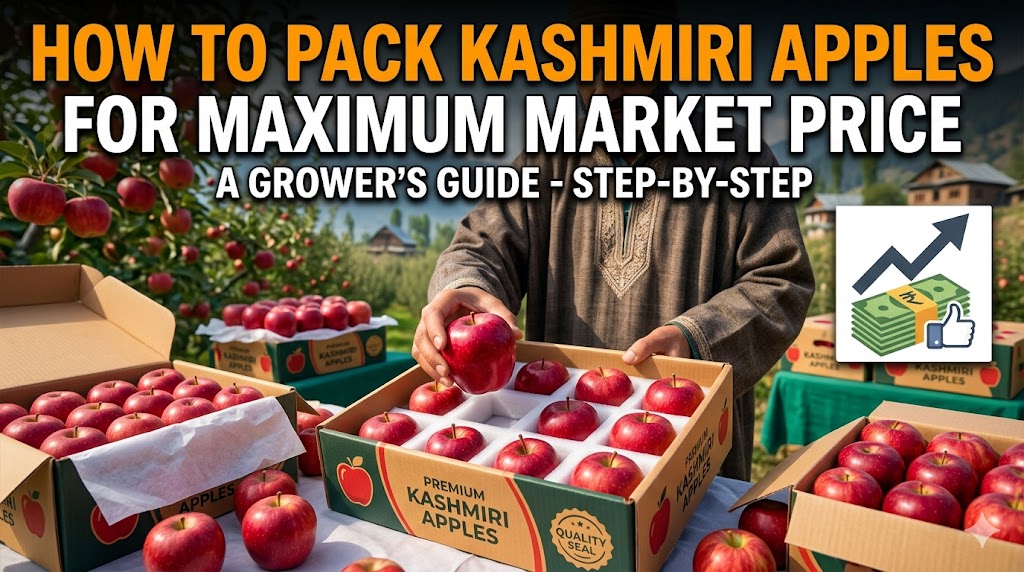
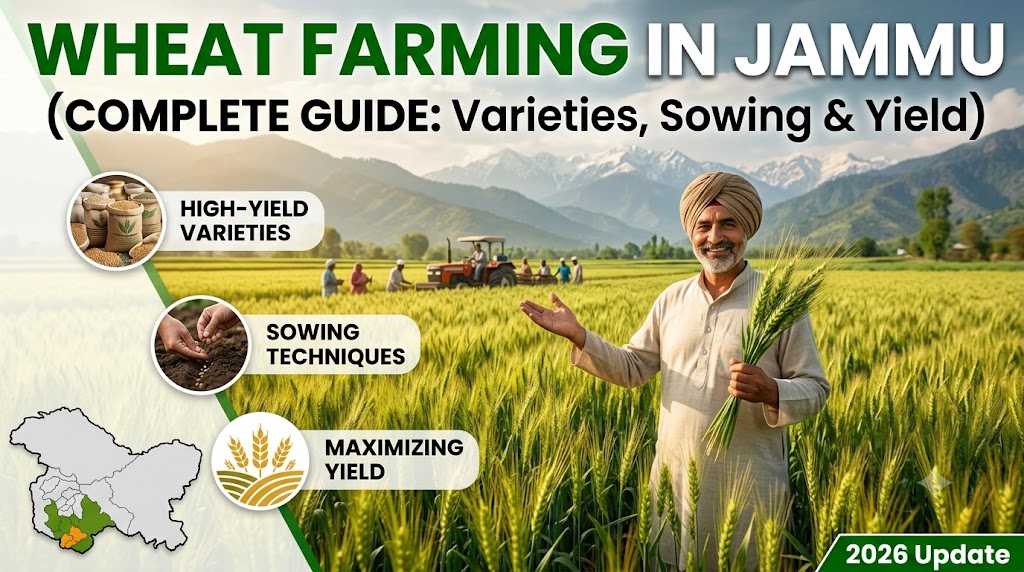
Latest Posts

Common questions about farming, orchards and JY Farm
JY Farm publishes practical guides and updates across agriculture, farming techniques, horticulture, dry fruit cultivation and farm technology, with a focus on conditions relevant to growers in Jammu & Kashmir and the wider Himalayan belt.
New articles and category updates are added regularly through the year, with seasonal content timed to planting, harvesting and orchard-care cycles so readers get advice when it is actually useful.
Many of our guides are written with Kashmir's temperate climate and high-altitude growing conditions in mind, covering crops like apples, walnuts, almonds and saffron. Always adjust timing for your specific micro-climate and elevation.
Agriculture broadly covers field crops, cereals and livestock farming, while horticulture focuses specifically on fruits, vegetables, flowers and ornamental plants, usually on a smaller, more intensively managed scale.
J&K is known for almonds, walnuts and apricots, particularly from the Kashmir Valley, where the temperate climate and well-drained mountain soils support high-quality nut and stone-fruit orchards.
Late autumn (October–November) and early spring (February–March), before bud break, are generally the best windows for planting fruit trees, allowing roots to establish before the main growing season begins.
Simple tools like weather forecasting apps, soil-testing kits, drip irrigation timers and mobile market-price trackers can help small farmers reduce waste and time inputs better, even without large capital investment.
Integrated pest management, combining regular orchard inspection, pruning for airflow, sticky traps and targeted, need-based spraying rather than routine chemical use, tends to protect yields while reducing cost and residue.
Begin by building soil health with compost and crop rotation, source organic or untreated seed, and phase out synthetic inputs gradually, since soil biology typically needs a season or two to rebalance.
Apples generally do best in deep, well-drained loamy soil with good organic content and a slightly acidic to neutral pH, which is common across much of the Kashmir Valley's orchard belts.
Yes. We welcome contributions from farmers, students and agriculture professionals. Reach out through our contact page with your topic idea and we will get back to you about publishing it.
Browse by category, Agriculture, Farming, Horticulture, Dry Fruits, Technology and Blog, from the homepage, or bookmark the site and check back regularly as new posts are added across all categories.
This website JYfarm.in is not affiliated with any government agriculture department, horticulture board, Krishi Vigyan Kendra, or other official farming authority. Content shared here is based on personal orchard experience and general research, and is provided for educational and informational purposes only. Soil, climate, and crop conditions vary by location, so always adapt advice to your own land and consult a local agricultural expert before making major farming decisions.