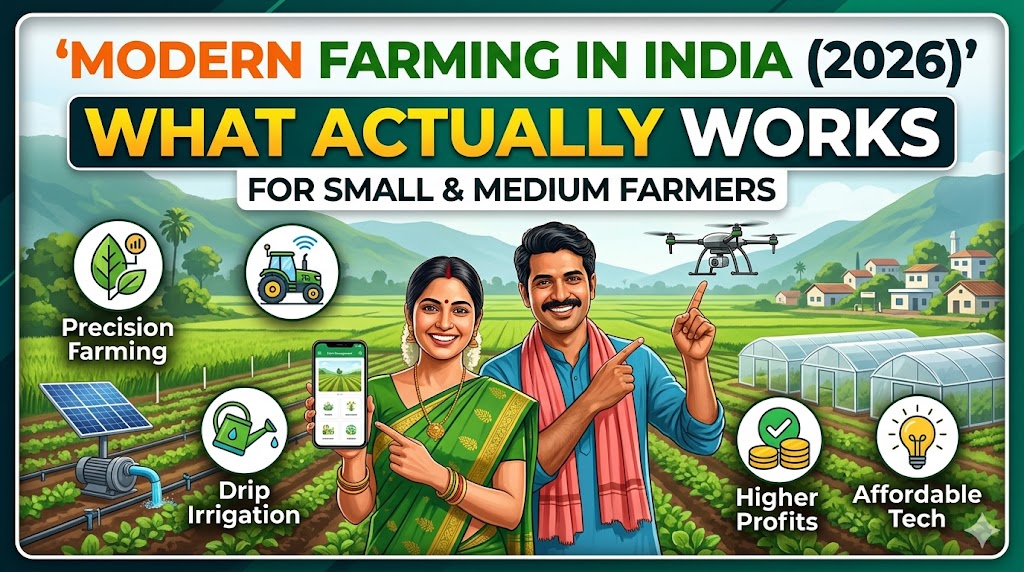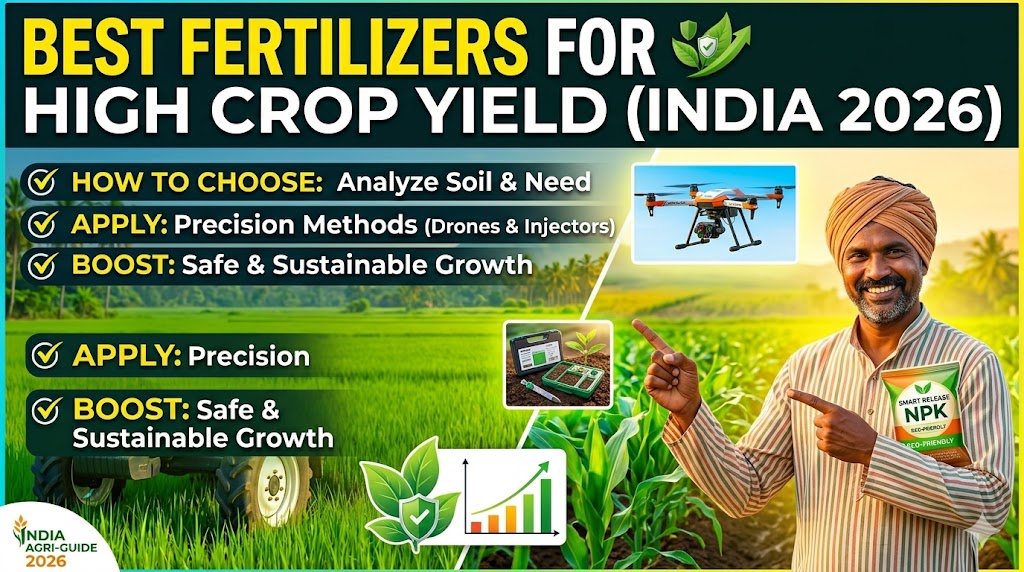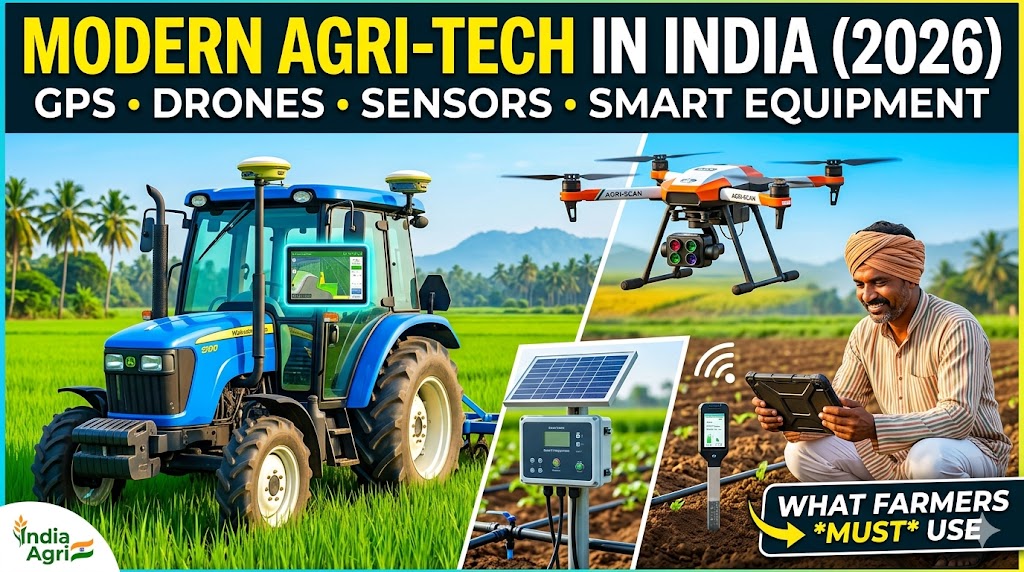
Modern agricultural tools help farmers move away from “guesswork farming” to more precise decisions. But the best tool is not the most advanced one—it is the tool that solves your real farm problem and fits your budget and farm size.
This guide explains the most common modern tools used in Indian agriculture—GPS systems, drones, IoT/soil sensors, and precision machinery—and gives a practical roadmap for choosing tools that improve yield and reduce input costs.
1) How to choose modern tools (ROI-first approach)
Before buying any tool, check:
- Your problem: water waste, fertilizer inefficiency, pest/disease losses, or labor cost
- Your data access: can you interpret the tool’s output?
- Your operational routine: scouting, record keeping, and action plans
- Market value: do you sell into buyers who pay for higher quality?
2) GPS and guidance systems (for accurate field work)
GPS helps reduce overlapping and missing coverage during operations like ploughing, planting, or spraying.
This can reduce fuel and input waste.
Benefits
- Better uniformity across the field
- Reduced overlaps and fuel consumption
- More accurate input application timing
When GPS is most useful
- Large fields where repeated coverage mistakes cost more
- Farmers who do spraying frequently
- Operations needing uniform coverage
3) Drones (UAVs) for scouting and early detection
Drones can cover large areas quickly and help detect problems that are difficult to see from ground level.
Some drones use multispectral or thermal sensors to identify crop stress patterns.
What drones can do for farmers
- Early detection of stressed zones (water stress, nutrient issues)
- Faster field scouting
- Improved decision timing for disease and pest control
Practical limitations
Drone technology is helpful, but it is not magic.
You still must act on the findings with correct agronomy measures.
4) Soil moisture sensors and basic IoT (precision watering for smaller farms)
Many farmers overwater or underwater because they rely on fixed schedules.
Soil moisture sensors provide evidence-based timing for irrigation.
Key advantages
- Prevents drought stress and reduces water waste
- Helps stabilize yield quality
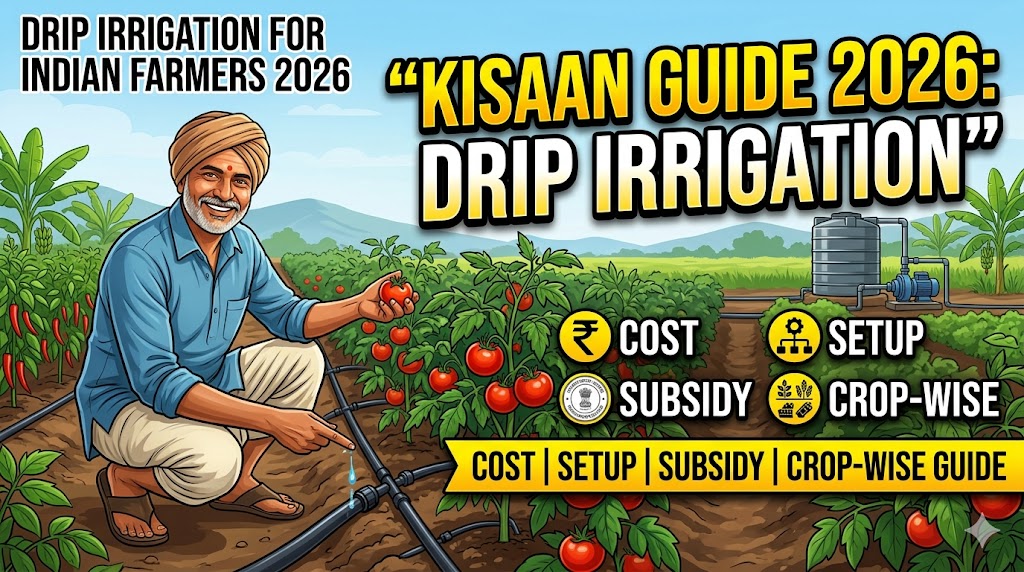
- Improves fertilizer efficiency when combined with drip/fertigation
How to install correctly
- Place sensors in representative soil spots (not only field edges)
- Choose correct root-zone depth
- Calibrate based on soil response and local field conditions
5) Precision sprayers and variable-rate approaches
Precision spraying tools reduce chemical waste by applying inputs only where needed.
This can reduce costs and slow resistance development in pests.
Best use cases
- Patchy pest infestation areas
- Fields where crop variability is high
- Farmers who already maintain scouting records
6) Farm management software (record keeping = better decisions)
Modern tools also include software that stores field operations history:
irrigation dates, fertilizer schedules, spray logs, yields, and disease notes.
This helps you plan next season with less guesswork.
Minimum records to maintain
- Crop stage and date
- Irrigation events
- Fertilizer and input usage
- Disease/pest observations and actions
- Harvest yields by block
7) Buying guide: what a small/medium farmer should start with
If you are starting, avoid buying everything at once.
A practical adoption route is:
| Start level | Tools to consider | Expected benefit |
|---|---|---|
| Level 1 | Soil test + moisture planning + drip basics | Less water waste, better growth stability |
| Level 2 | Soil moisture sensors + weather-based disease timing | Reduced disease losses and fertilizer waste |
| Level 3 | GPS guidance + drone scouting (service-based) | Operational efficiency and early stress detection |
| Level 4 | Variable-rate spraying/planting and full automation | High savings only when farm records and markets are strong |
8) FAQs (modern tools)
Q1: What is the simplest modern tool farmers can start with?
A: Soil testing plus moisture-controlled irrigation (drip scheduling/mulching) is usually the easiest high ROI step.
Q2: Are drones affordable for small farmers?
A: Many farmers use drones through service providers. The service can be cheaper than owning a drone.
Q3: Do sensors replace farmer judgment?
A: No. Sensors provide evidence; you still need scouting and agronomy actions based on crop stage and local conditions.
Conclusion
Modern agricultural tools in India can improve yields and reduce input costs, but only when farmers adopt them with an evidence-based routine: record keeping, scouting, and action plans. Start simple, choose tools that match your farm problem, and you will get measurable benefits rather than unused equipment.